The markets have become so data-driven that traders are compelled to use algorithms to gain a competitive edge. After all, the early bird gets the worm. These algorithms are designed to detect micro trends in indexes like Nifty that appear before becoming visible to the broader market. But how do Nifty-focused algos work? Let’s find out.
1. High frequency data processing
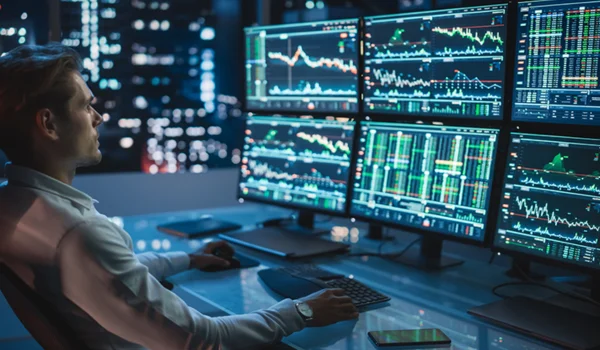
The National Stock Exchange (NSE) provides tick feeds, also called Direct Market Access (DMA), mainly to professional firms. These ticks capture every single trade and quote update in the market, allowing algorithms to detect minute shifts in price and liquidity, changes in momentum, and order-flow imbalances.
Certainly not every microsecond is important, which is why the algorithms must aggregate data to identify statistically proven patterns. These patterns usually precede larger price swings. Also, the infrastructure needed to carry this out excludes common traders, which is why it’s mostly institutions that conduct high-frequency trading.
2. Order Book Analytics and Imbalance Detection
Price is usually preceded by the order flow; imbalances in the order book have proven to reliably predict short-term price movement. Modern nifty algo trading systems tap into the order book data to understand the behaviour of buyers and sellers in real time. A sudden spike in buy orders at multiple price levels indicates a strong demand building. When large sell orders are bought without a decline in price, it signals hidden buying interest.
Algorithms calculate ratios of buy vs. sell volume at each tick and monitor how quickly they are added or removed at key levels. Traders tend to backtest their algorithms to fine-tune their precision.
3. Statistical Pattern Recognition
SEBI notes in its financial market reports that algorithmic trading relies heavily on statistical models to analyse high frequency data. As traders and researchers have gone deeper down this rabbit hole, they’ve uncovered statistically relevant patterns which the algorithms have been taught to recognise.
Algorithms are constantly monitoring Nifty futures and options data using tools such as z-scores, moving averages, and correlation checks to understand unusual micromovements in the market–giving traders the headstart they need.
4. Machine Learning Driven Detection
With machine learning, algorithms have been taught to classify trend-forming setups and discover hidden structures in the data. Machine learning has also improved microtrend detection by subjecting the algorithm to millions of historical scenarios.
In practice, statistical models like ARIMA, Hidden Markov, and Support Vector Machines help trading systems adjust to changing market conditions and improve their performance in fast-moving, high-frequency trading environments. SEBI has acknowledged that machine learning is being used on algorithms to detect patterns not easily visible to the human eye.
5. Options Data as Market Indicator
Academic research points to options order flow leading short-term price movement in the underlying index. This occurs because informed traders often express their views in options first, utilising leverage. By tracking these flows, algorithms can then anticipate market moves before they become visible.
Algorithms monitor changes in implied volatility (IV), open interest (OI), and put-call ratios to detect subtle shifts. If there’s a sudden spike in sellers selling call options at resistance levels, it signals that they do not expect the price to rise. This early warning signal can help traders plan their moves well in advance.
Conclusion
Detecting microtrends in Nifty is not guesswork or pure luck. It’s a combination of high-frequency data analysis, algorithmic trading strategies, statistical modelling, and machine learning. Each of these factors is responsible for enhancing speed, accuracy, and capability in detecting subtle shifts.
With AI gathering pace, the sophistication in these algorithms is only going to increase, making them even more capable than they already are. The question is, where does that leave human intuition?