In India’s fast-growing financial landscape, the terms NBFC (Non-Banking Financial Company) and Bank often appear in discussions related to loans, deposits, and financial services. While both institutions play a critical role in boosting economic activity, they are fundamentally different in structure, regulation, and the type of services they offer. For consumers, investors, and business owners, understanding these differences is essential to making informed financial decisions.
This article explains what NBFCs and banks are, their major differences, and how each contributes to India’s financial system.
What is a Bank?
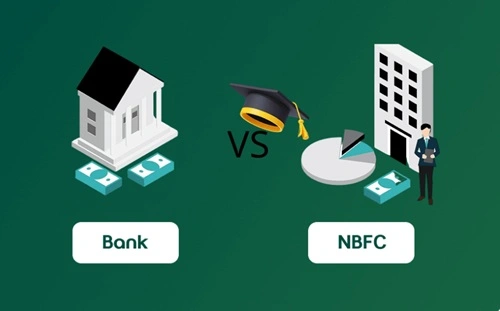
A bank is a financial institution that has a banking license from the RBI (Reserve Bank of India). Banks can legally accept deposits from the public, lend money, provide payment services, and offer a range of financial products like savings accounts, fixed deposits, credit cards, and more.
Types of Banks in India
- Public Sector Banks (PSBs) – Majority government-owned (e.g., SBI, PNB)
- Private Sector Banks – Privately owned (e.g., HDFC Bank, ICICI Bank)
- Foreign Banks – International banks with branches in India (e.g., Citibank, HSBC)
- Regional Rural Banks (RRBs)
- Co-operative Banks
- Small Finance Banks (SFBs)
- Payments Banks
Banks form the backbone of India’s formal financial system.
What is an NBFC?
An NBFC (Non-Banking Financial Company) is a financial institution registered under the Companies Act, 2013, regulated by the RBI, but it cannot perform some core banking functions such as accepting demand deposits (like savings or current accounts).
NBFCs primarily provide:
- Loans and credit facilities
- Investment and wealth management services
- Asset financing
- Microfinance
- Insurance and housing finance (through specialized NBFCs)
Examples include Bajaj Finance, Tata Capital, Muthoot Finance, HDFC Ltd (before merger).
NBFCs help fill the credit gap in segments not fully served by banks, such as rural borrowers, small businesses, and individuals with limited credit history.
NBFC vs Bank: Key Differences
Below is a simple comparison to understand the differences clearly:
| Parameter | Bank | NBFC |
| Regulator | RBI | RBI (limited), MCA |
| Accept Deposits | ✔ Yes (Savings, Current, FD) | ✘ No (except some NBFCs can accept limited-term deposits) |
| Payment System Access | ✔ Allowed (UPI, NEFT, RTGS) | ✘ Not Allowed |
| Credit Creation | ✔ Yes | ✘ No |
| Foreign Investment (FDI) | 74% cap for private banks | 100% allowed |
| SLR/CRR Requirements | Mandatory | Not required |
| Examples | SBI, HDFC Bank | Bajaj Finance, Muthoot Finance |
| Speed of Loan Approval | Moderate (stricter checks) | Fast (flexible criteria) |
| Interest Rates (Loans) | Generally lower | Higher due to higher risk |
| Target Segments | Mass retail, corporates | SMEs, underserved borrowers, niche markets |
How Do They Differ in Operations?
1. Regulation and Control
Banks are heavily regulated by the RBI with strict norms on capital adequacy, liquidity, customer deposits, payment security, and loan provisioning.
NBFCs are also regulated by the RBI but enjoy more operational flexibility, which allows them to innovate and reach underserved markets.
2. Deposits and Payments
Banks can accept demand deposits (savings/current accounts), enabling them to offer lower-interest loans.
NBFCs cannot directly participate in the payment ecosystem—no cheque books, no UPI, no NEFT/RTGS access.
3. Credit and Lending
- Banks follow strict credit checks, making them safer but slower in loan disbursal.
- NBFCs use modern underwriting, alternate data, and relaxed eligibility criteria, resulting in quicker approvals, especially for personal loans, business loans, and consumer durable financing.
4. Interest Rates
Because NBFCs do not have access to low-cost deposits, they usually offer loans at higher interest rates. However, their flexible processes attract customers who need urgent credit or have non-traditional income sources.
NBFC vs Banks: Which is Better?
The answer depends on your needs:
Choose a Bank If You Want:
✔ A savings or current account
✔ Lower loan interest rates
✔ Safe deposit products like FD/RD
✔ A wide range of financial services in one place
✔ Long-term, secure banking relationships
Choose an NBFC If You Want:
✔ Quick personal loans or consumer durable loans
✔ Easy business financing without heavy paperwork
✔ Loans even with limited credit score
✔ Tailored financial products for specific sectors
✔ Flexible repayment structures
NBFCs are ideal for borrowers needing convenience and speed, while banks are ideal for traditional banking and stability.
Role of Banks and NBFCs in India’s Financial Growth
Both institutions complement each other:
- Banks ensure financial stability, promote savings, and support large-scale lending.
- NBFCs reach remote areas, support micro-borrowers, and fuel credit growth in sectors like MSME, agriculture, and housing.
Together, they bridge the gap between formal credit and growing financial needs across the country.
Final Verdict
Both NBFCs and banks are equally important, but they serve different purposes. If you want secure banking services, deposits, and low-interest loans—banks are better.
If you want fast and flexible loans with easier approval—NBFCs are better.
Understanding their differences helps customers choose the right financial partner based on their goals and financial situation.